Inheriting a property

What really matters?

At Heriditas.lu, we accompany you with empathy and clarity in every phase of your property succession in Luxembourg.

Welcome to Heriditas.lu

We preserve values.

We understand that inheriting a property can trigger strong emotions and involve numerous administrative steps. Our mission is to support you during this transitional phase with concrete, clear and tailored advice for your situation.

We guide you on:

  • Managing an inherited property (sale, rental, retention)
  • Assessing the value of the property
  • Estate planning
  • Tax and legal procedures
  • Connecting you with experts
Senior couple looking out over the countryside — passing on your estate with peace of mind
Acting with foresight means preserving. With Heriditas.lu, you are not alone when it comes to inheritance.

Inheritance law in Luxembourg

Who inherits — and in what order?

In Luxembourg, the legal rules of succession follow a system of orders of heirs. The inheritance depends on which relatives are alive at the time of death — each order excludes the following ones. The surviving spouse holds a special position and takes precedence over the heirs of the 2nd, 3rd and 4th orders.

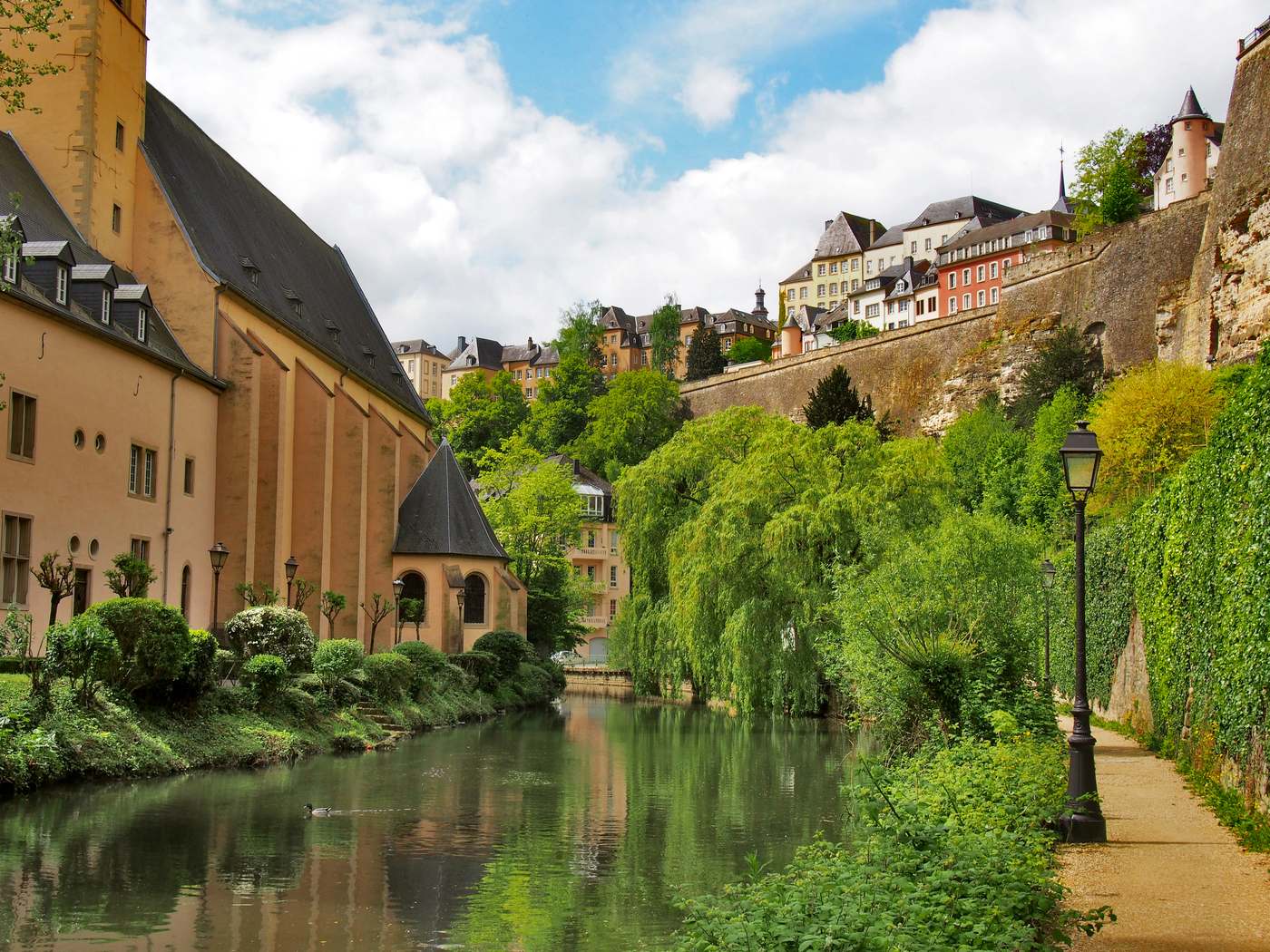
Luxembourg old town along the Alzette river
1st order

Descendants — children, grandchildren, great-grandchildren

The children of the deceased (whether legitimate, natural or adopted) inherit in equal shares. If a child is predeceased, their own descendants take their place (succession by representation).

2nd order

Parents, brothers and sisters — and their descendants

In the absence of descendants, the father and mother each receive one quarter of the estate; the brothers and sisters (or their children, by representation) share the remainder. If one parent is predeceased, their share accrues to the siblings. Without siblings, the father and mother each inherit half.

3rd order

Ascendants — grandparents, great-grandparents

In the absence of heirs of the first two orders, the estate is divided in half between the paternal and the maternal line (the so-called “fente” rule). Within each line, the closest ascendant in degree inherits.

4th order

Ordinary collaterals — uncles, aunts, cousins

Lastly, the remaining collateral relatives inherit, the estate still being divided between the paternal and maternal lines; within each line, the closest relative in degree prevails. If there are no heirs at all, the estate reverts to the State.

Surviving spouse

A special right of inheritance

With children: the spouse chooses between a child's share (that of the least-receiving child) in full ownership — at least one quarter of the estate — or the usufruct of the jointly occupied family home and its furniture. The option must be exercised within three months and forty days; failing that, the usufruct applies. Without children: the spouse takes precedence over all other relatives and inherits the entire estate. Note: the spouse is not a protected (reserved) heir — only children benefit from that protection.

Registered partnership (PACS)

No automatic inheritance

The surviving partner does not inherit automatically. Only a will can grant them a share of the estate. Without such a provision, they have no legal right of inheritance.

No heirs at all

The State inherits

The estate reverts to the State of Luxembourg. Find out how to organise your estate if you have no heirs →

The legal situation in Luxembourg

The reserved portion (réserve héréditaire)

In the Grand Duchy of Luxembourg, the complete disinheritance of children is not permitted under inheritance law.

Under the legal provisions on the reserved portion, direct-line descendants have an inviolable right to part of the estate that cannot be infringed. It is therefore possible to reduce a child's share by will, but only within the limits allowed by the legal reserve. Exceptional cases, strictly defined by law, may justify the disinheritance of a protected heir — but they remain the exception.

Only biological or adopted children benefit from this legal protection: stepchildren have, in the absence of adoption, no right to the reserved portion.

The reserved portion amounts to:

  • half of the estate where there is a single child;
  • two thirds of the estate where there are two children;
  • three quarters of the estate where there are three or more children.

A will may freely arrange the distribution of the disposable part of the estate, but it cannot deprive a child of the minimum share guaranteed by law.

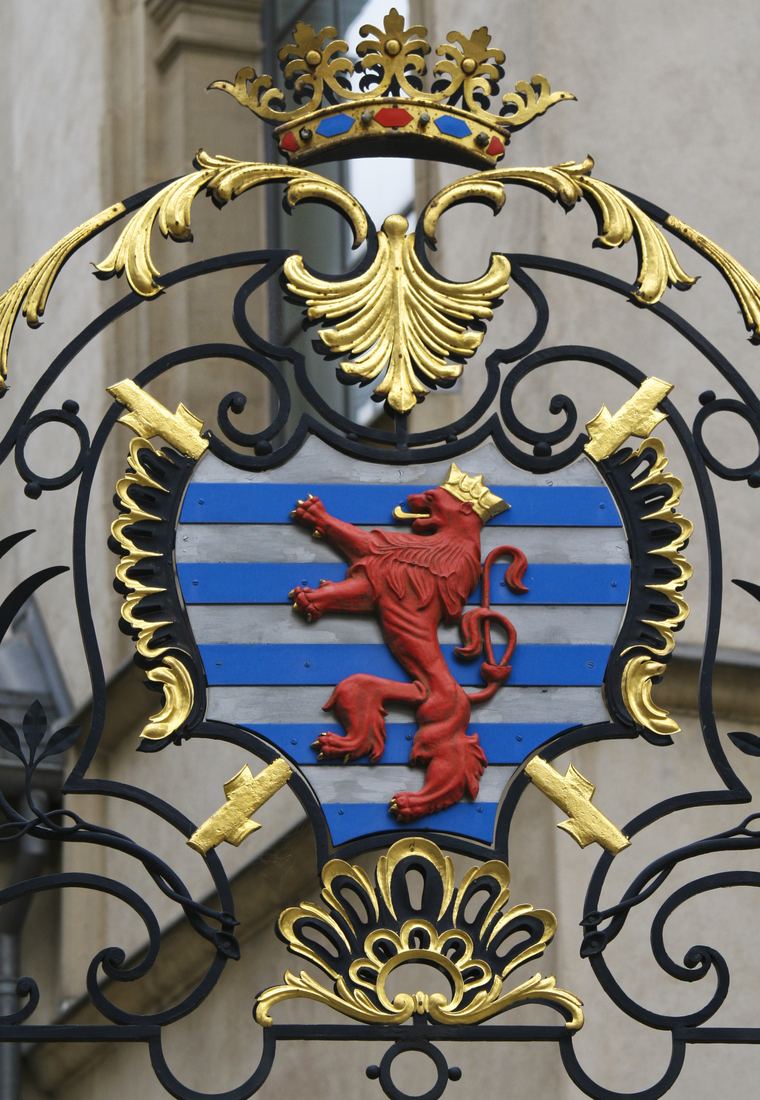
Coat of arms of the Grand Duchy of Luxembourg — the Luxembourg legal framework

Real Estate

Inherited property — sell or keep?

Inheriting a property brings not only joy, but also responsibilities and important decisions. Three options are open to you.

Small wooden house in a blossoming tree — the family property

In the Grand Duchy of Luxembourg, direct-line descendants, as well as the surviving spouse where there are common descendants, are fully exempt from inheritance tax on the share of the estate to which they are legally entitled. Without common descendants, the surviving spouse benefits from an allowance of thirty-eight thousand euros (€38,000) on the net share received; beyond that, a rate of 5% applies.

Where the estate is held in joint ownership by several heirs, any sale of estate property requires the express and unanimous consent of all co-heirs. It is therefore customary for the sale to take place on the open market, as this offers the best guarantee of obtaining a price in line with the property's market value.

Please note: if the property is resold less than five years after its acquisition by the deceased — the heirs take over the deceased's acquisition date — the gain realised is taxed as a “speculation profit” at ordinary progressive income tax rates. Beyond five years, a considerably more favourable regime applies (half the global rate).

Keeping and personally occupying an inherited property can offer both emotional and financial advantages. In Luxembourg, the surviving spouse (where there are common children) and direct-line descendants are fully exempt from inheritance tax on their legal share. A surviving spouse without common children benefits from an allowance of €38,000 (a rate of 5% applies beyond that).

Where several heirs jointly own the estate, any heir wishing to retain full ownership of the property must compensate the other co-heirs. The value of their own share of the estate is credited against the amount to be paid. It is therefore necessary to assess one's financial capacity and, where appropriate, to arrange bank financing.

It is also possible to acquire the property and then rent it out: the rental income can help cover the running costs and repayments of the financing taken out.

The image of the happy heir is often deceptive. Inheriting means above all taking on responsibility — including towards yourself. If, for example, the deceased leaves a villa encumbered with mortgages, the bank may already have initiated forced-sale proceedings. An heir who neglects the legal formalities and deadlines exposes themselves to serious setbacks.

In Luxembourg, the succession opens automatically upon the death of the deceased and passes by operation of law (ipso iure) to the legal heirs or to those designated by will. There is no specific probate court. If a will exists, it must be deposited with a notary, who is responsible for opening and registering it and who then informs the heirs concerned of its contents and their rights.

Every heir acquires the inheritance automatically. Anyone who does not wish to accept it must act and file an express declaration of renunciation with the registry of the competent district court within the legal period of three months and forty days. Acceptance may be express, or tacit — for example where an heir disposes of estate assets or settles estate debts.

Services

Comprehensive support — discreet and efficient

A large part of the population in the Grand Duchy only organises their estate at a late stage — or not at all. Yet estate planning is essential: it ensures that the wishes of the testator are respected, prevents family disputes and guarantees management in line with both legal requirements and financial and tax interests.

Heriditas brings together lawyers, tax advisors, notaries and real estate experts. Thanks to this unique alliance of expertise, we offer you personalised support — with competence and complete confidentiality. Beyond estate planning, we can also, if you wish, take on the fiduciary management of your assets, including the valuation and sale of inherited property.

Calculating inheritance tax and optimising taxes

Tax advisor

Which taxes apply to an inheritance in Luxembourg? Which allowances can you claim? While direct-line successions (for example, in favour of children or the surviving spouse) are in principle tax-exempt, inheritance or gift taxes may apply to more distant relatives or third parties — in addition to registration and transcription duties and, in the event of a later sale, possible taxation of real estate capital gains. We present you with the best options, whether you wish to preserve your assets for future generations or to sell your inheritance under tax-optimised conditions.

Lawyer

Our network provides you with multidisciplinary expertise in all matters of Luxembourg inheritance, tax and real estate law. In the event of disputes within a community of heirs, we represent and defend you and ensure that your rights and legitimate interests are protected.

Notary

The sale of an inherited property in Luxembourg often proves far more complex than expected. The notarial deed of sale, mandatory under Luxembourg law, requires careful preparation on the part of the seller. Heriditas assists you from the preparatory phase through to the signing of the notarial deed, ensuring that no legal or tax errors are made in the design of the contract.

Property valuation

No two properties are alike. Location, build quality or general condition are just a few of the criteria that determine a property's value. The more factors a valuation takes into account, the more reliable the result — and the greater your chances of selling under the best possible conditions. Heriditas precisely determines the market value of your inherited property according to Luxembourg standards.

Bank

Assets held by the deceased with a Luxembourg bank form an integral part of the estate. To gain access, the heirs must prove their status as heirs — for example, by producing a certificate of inheritance or another authentic deed drawn up by a Luxembourg notary. Assets held in a joint account do not automatically pass to the heirs: they may belong, in whole or in part, to the co-holder of the account. We advise you on all matters relating to estate assets held with banks in Luxembourg.

The difficulties without Heriditas

Without support, you must make decisions on tax and inheritance law alone, at the risk of not fully benefiting from the applicable allowances. The value of your property may be misjudged, the preparation and execution of the deed of sale is long and complex, and disputes within the community of heirs risk, in the worst case, escalating.

Our fees — full transparency

The first exchange helps us understand your situation. Your personal dossier with concrete solutions is prepared for a flat fee of €500 excl. VAT (HTVA). Subsequent consulting appointments are billed separately — you always receive a clear cost overview in advance.


No heirs

Organising your estate without heirs

When a person dies in Luxembourg without legal heirs and without a will, the estate ultimately reverts to the State of Luxembourg. There are, however, various ways to organise your estate in a targeted manner.

Signing a will with an advisor
Option 1

Draw up a will

Without heirs entitled to a reserved portion, you have full testamentary freedom: you can appoint any person, a foundation, a friend or a charitable organisation as heir. The will may be handwritten (holographic), notarial or international. Without a will, everything ultimately goes to the State.

Option 2

Make gifts during your lifetime

Assets can also be passed on during your lifetime by way of gifts. Gift taxes apply in Luxembourg, varying according to the relationship between donor and beneficiary.

Option 3

Support a foundation or association

Many people without heirs choose to dedicate their assets to a foundation or association — for social, cultural or charitable purposes.

Option 4

Appoint non-relatives

In the absence of legal heirs, you are entirely free to appoint people from your private or professional circle as heirs — even without any family connection.

The perfect solution without heirs

Vente en viager — a secure solution

You own a property but have no direct heirs? Instead of letting your assets revert to the State, you can convert your property into a life annuity. You benefit from regular payments and — depending on your wishes — an immediate initial payment (the "bouquet"). In most cases, you retain the right of use or occupancy of your home.

  • Financial independence in retirement thanks to a guaranteed annuity.
  • The right to live in your own home for life.
  • Free choice: you decide how your assets are used.
  • Security: all contracts are drawn up and guaranteed by notarial deed.
Contact us today

Valuation

Submit your property

Describe your property in a few lines — we will get back to you promptly and in complete confidence.

Thank you! We have received your request and will get back to you as soon as possible.

Your data is used solely to process your request and is never passed on to third parties.

Contact

Contact us

Every inheritance is unique. Let's talk about your situation — with expertise and confidentiality.

Address274, route de Thionville
L-5884 Howald, Luxembourg

Write to us

Thank you! We have received your message and will get back to you as soon as possible.